Traders Now See 50% Chance of Fed Rate Hike by October
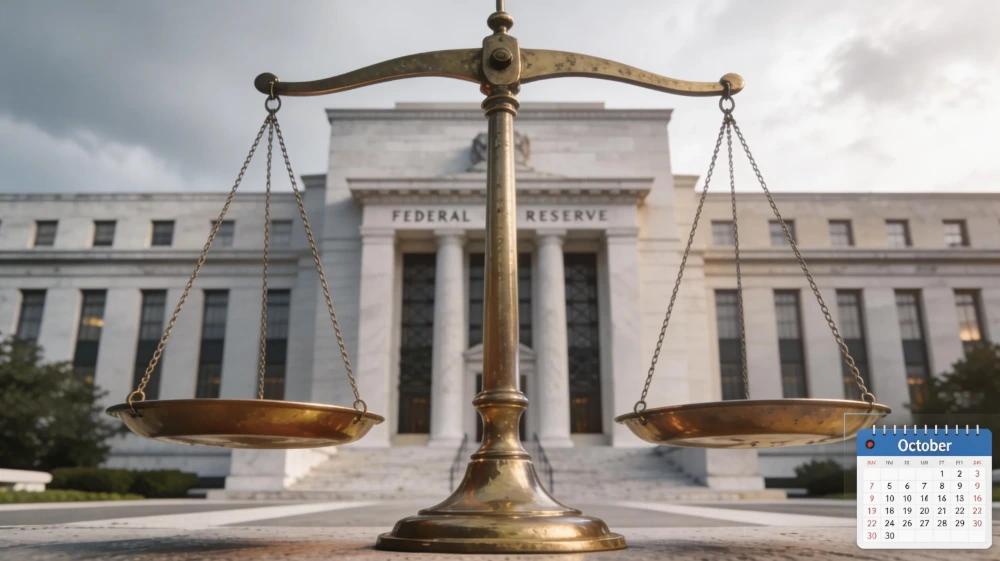
Interest rate futures markets have undergone a remarkable repricing, with traders now assigning a 50% probability that the Federal Reserve will raise interest rates by its October meeting. This marks a dramatic reversal from earlier this year when markets were pricing in multiple rate cuts, reflecting a fundamental reassessment of the inflation and economic outlook .
From Rate Cuts to Rate Hikes: The Rapid Repricing
Just two months ago, futures markets were pricing in a near-certainty of rate cuts beginning as early as June 2026. Today, the landscape looks vastly different. According to CME FedWatch data, the implied probability of a 25-basis-point rate hike by the October FOMC meeting has surged to approximately 50%, up from less than 10% just four weeks ago .
This shift represents one of the most rapid repricings of Fed expectations in recent memory. The October meeting has now overtaken December as the focal point for potential policy tightening, suggesting traders see the window for a move opening earlier than previously anticipated .
What’s Driving the Shift?
Several converging factors have forced traders to reevaluate the path of monetary policy:
1. Persistent Inflation Pressures: The latest Consumer Price Index (CPI) and Personal Consumption Expenditures (PCE) reports have shown inflation remaining stubbornly above the Fed’s 2% target. Core inflation has been running at an annualized pace of approximately 3.2%, with services inflation particularly resistant to cooling .
2. Strong Labor Market Resilience: Despite elevated interest rates, the U.S. labor market continues to show remarkable strength. The February jobs report added 275,000 new positions, far exceeding forecasts, while wage growth accelerated to 4.5% year-over-year. This strength suggests the economy can withstand further tightening .
3. Hawkish Fed Communications: Recent statements from Federal Reserve officials, including Chair Jerome Powell, have consistently emphasized that the central bank is “not in a hurry” to cut rates and that further tightening remains on the table if inflation progress stalls. This deliberate messaging has shifted market expectations .
4. Resilient Consumer Spending: Retail sales data has surprised to the upside, with consumers continuing to spend despite higher borrowing costs. This economic resilience gives the Fed room to maintain or even tighten policy without triggering an immediate recession .
October FOMC Meeting Now in Focus
The October 27-28 Federal Open Market Committee (FOMC) meeting has emerged as the key inflection point for rate expectations. According to futures market pricing:
– Probability of no change in October: ~50%
– Probability of 25 basis point hike: ~50%
– Probability of larger move (50 bps): Minimal (less than 5%)
Beyond October, markets are pricing in additional tightening possibilities. The December meeting now shows an implied probability of approximately 65% for at least one rate hike by year-end, suggesting traders believe a move is more likely than not before 2027 .
Market Implications
The shift in rate expectations has already rippled across asset classes:
Treasury Market: The yield on the 10-year Treasury note has climbed to 4.33%, its highest level since August 2025. Shorter-term yields, which are more sensitive to policy expectations, have risen even more sharply, with the 2-year yield now trading above 4.10% .
Equity Markets: Stock indices have faced increased volatility as investors adjust to the “higher for longer” interest rate narrative. Growth stocks and technology shares—sectors with long-duration cash flows—have been particularly sensitive to the repricing, with the Nasdaq Composite showing notable underperformance relative to value indices .
Cryptocurrency Markets: Bitcoin and other digital assets, which have demonstrated sensitivity to global liquidity conditions, have faced headwinds. The prospect of tighter monetary policy typically reduces risk appetite and pressures speculative assets. The total cryptocurrency market capitalization has seen outflows as traders reassess the macro environment .
U.S. Dollar: The dollar index (DXY) has strengthened against major currencies, reflecting the widening interest rate differential between the United States and other developed economies. A stronger dollar typically exerts pressure on commodities and emerging market assets .
What Comes Next?
With October now representing a coin-flip probability for a rate hike, market attention will focus on incoming economic data that could tip the scales:
– March CPI Report: Due in mid-April, this will provide the next critical read on inflation progress
– March Jobs Report: Scheduled for early April, will show whether labor market strength persists
– PCE Inflation Data: The Fed’s preferred inflation gauge, due later this month
– Fed Communications: Speeches from Fed officials, particularly Chair Powell, will be parsed for policy signals
Additionally, the April 30-May 1 FOMC meeting will be closely watched for any shifts in the post-meeting statement that could signal a growing inclination toward tightening. While no rate move is expected at that meeting, the language used will provide crucial clues about the Committee’s thinking .
Analyst Perspectives
“The market has moved from pricing in rate cuts to pricing in rate hikes with remarkable speed,” said a senior rates strategist at a major investment bank. “The 50% probability for October reflects genuine uncertainty about the Fed’s next move. With inflation sticky and the economy resilient, traders are realizing that the next policy move could just as easily be up as down.”
However, some analysts caution that the rapid repricing may have overshot. “Markets have a tendency to overreact to data surprises,” noted a chief economist. “While the case for a hike has certainly strengthened, we’re not yet at the point where it’s the base case. The Fed will want to see more evidence that inflation progress has truly stalled before acting.”
As the October meeting approaches, the probability will continue to fluctuate based on incoming data. What is clear is that the era of certainty about rate cuts is over, replaced by genuine debate about the Fed’s next move .
Sources: CME FedWatch, Bloomberg, Reuters, Wall Street Journal, Federal Reserve, U.S. Bureau of Labor Statistics, Bureau of Economic Analysis.
Disclaimer: This content is for market information purposes only and is not investment advice. Futures trading and leveraged products involve significant risk and may not be suitable for all investors.