10-Year Treasury Yield Surges to 4.33%, Highest Since August
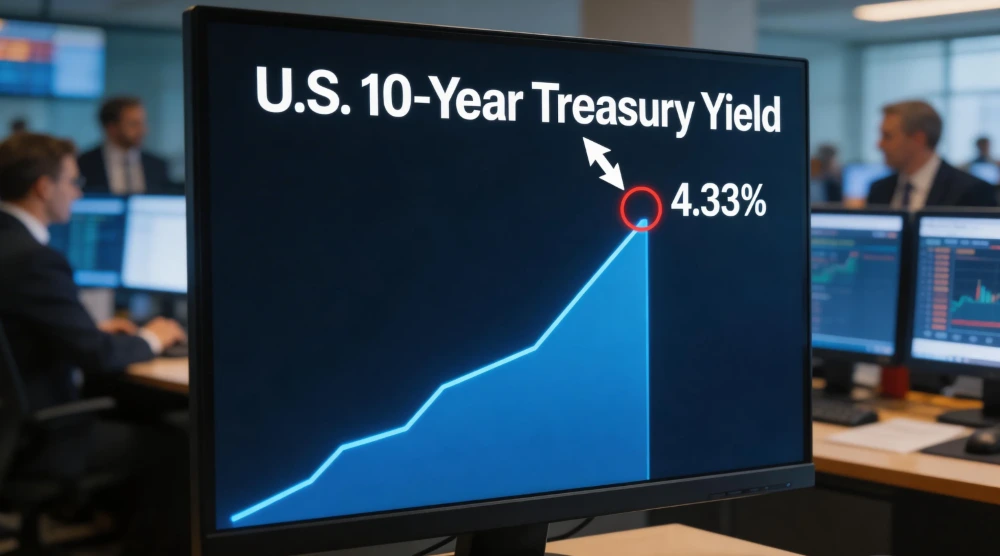
The yield on the benchmark 10-year U.S. Treasury note climbed to 4.33% on Friday, reaching its highest level since August of last year, according to data from Eastmoney Choice and confirmed by multiple financial outlets [citation:1][citation:2][citation:5]. The move reflects growing investor concern that the Federal Reserve may maintain higher interest rates for a longer period than previously anticipated.
Broad-Based Selloff Across the Curve
The rise in long-term yields was accompanied by significant selling pressure across shorter maturities. Yields on 2-year to 5-year Treasury notes surged by at least 10 basis points on the day, indicating a broad-based repricing of interest rate expectations across the entire yield curve [citation:1][citation:4]. The 2-year note, which is particularly sensitive to Fed policy expectations, saw one of the sharpest increases.
This simultaneous rise across maturities suggests the move is driven by shifting macroeconomic expectations rather than isolated technical factors. The yield curve has shown signs of steepening, with longer-dated yields rising faster than their short-term peers in recent sessions [citation:6].
What’s Driving the Selloff?
Several factors appear to be converging to push Treasury yields higher:
1. Hawkish Fed Expectations: Market participants are increasingly pricing in the likelihood that the Federal Reserve will keep rates elevated through the remainder of 2026. The central bank’s latest Summary of Economic Projections signaled fewer rate cuts than previously expected, reinforcing the “higher for longer” narrative [citation:3].
2. Resilient Economic Data: Recent economic indicators have shown surprising strength, suggesting the U.S. economy continues to perform well despite the highest interest rates in decades. This resilience reduces the urgency for the Fed to pivot to rate cuts.
3. Supply Concerns: The Treasury Department’s ongoing issuance of new debt to fund government operations continues to add supply to the market, putting upward pressure on yields. With the federal deficit remaining elevated, this supply dynamic is likely to persist [citation:3].
4. Geopolitical Uncertainty: While geopolitical tensions typically drive safe-haven flows into Treasurys—which would lower yields—the current environment has been complicated by inflation concerns linked to energy prices. Oil prices remain elevated amid ongoing Middle East tensions, adding to inflationary pressures [citation:3].
Investment Implications and Market View
Despite the sharp rise in yields, some market strategists see value emerging at current levels. Russell Investments’ senior investment strategist BeiChen Lin noted that at levels around 4.3%, the 10-year Treasury yield suggests “a whisker of attractiveness,” though he cautioned that this level is not far from fair value [citation:6].
The 4.33% level represents a key technical resistance point. If yields break decisively above this threshold, analysts suggest the next target could be the October 2025 highs near 4.50%. Conversely, a pullback could see yields retest the 4.20% support zone.
Impact on Risk Assets
The rise in Treasury yields carries significant implications for broader financial markets. Higher risk-free rates typically weigh on equity valuations, particularly for growth stocks and technology companies that have long-duration cash flows. The cryptocurrency market, which has shown sensitivity to macro liquidity conditions, also faces headwinds from rising yields.
Investors will be watching closely for any comments from Federal Reserve officials in the coming days that might provide further clarity on the path of monetary policy. The next major catalyst for the bond market will be the release of the Personal Consumption Expenditures (PCE) inflation data, the Fed’s preferred inflation gauge, due later this month [citation:3].
Sources: Eastmoney Choice, Bloomberg, Mitrade, Barron’s, Jiemian News, National Business Daily, The Block.
Disclaimer: This content is for market information purposes only and is not investment advice. Bond investing involves risks, including interest rate risk and credit risk.